
In our surroundings, we come across devices and appliances that rely on electricity. Within industrial settings, systems such as heating, ventilation, lighting, and machinery require electrical power to operate. Serving as the epicenter of power distribution for these electrical loads are diverse control panels, including distribution switchgears and motor control centers, complemented by other power distribution assets like transformers and industrial control panels.
Electric motors necessitate power supply and control for their operation. While simpler versions involve equipment for motor start and stop, often the demands surpass these basics. A Motor Control Center (MCC) encompasses a cluster of assorted starting components housed in a shared unit. This assembly comprises one or more incoming protected feeders channeling power to collection rails that traverse the entire unit. Enclosed compartments within the unit house outgoing groups where specific loads receive their power supply and control. An outgoing group might entail multiple elements like switches, fuses, push buttons, lights, in addition to data communication and measurement devices. All these components align with the function assigned to the outgoing group. The design also features sections for external connections, fuses catering to lighter loads, and segments designated for measurement. The diversity is extensive, unlocking numerous potential applications.
Motor control centers are used in various sectors:
Within power generation, they assume roles in controlling and managing diverse auxiliary systems for gas turbines, encompassing lubricating oil pumps, fuel pumps, ventilation fans, and heaters.
For maritime applications, they govern pump motors, compressors, and auxiliary systems.
In the mining industry, they are used to provide power to sorting plants and ventilation systems.
In industrial operations, motor control centers are used to distribute power and control production lines, conveyor belts, cranes, hoists, and more.
Elektromontage AB is a licensed partner to Siemens with authority to sell, design, manufacture and deliver Siemens Sivacon switchgear to our customers.
In the process we add value by our market knowledge and our flexibility to adapt to the customers specification sometimes late in the process where close collaboration between the customer and the manufacturing process is crucial for success. The partnership with Siemens has also been an advantage in terms of customer feedback and design improvements.
Siemens Sivacon is a switchgear with a high degree of standardization suitable for industrial applications.
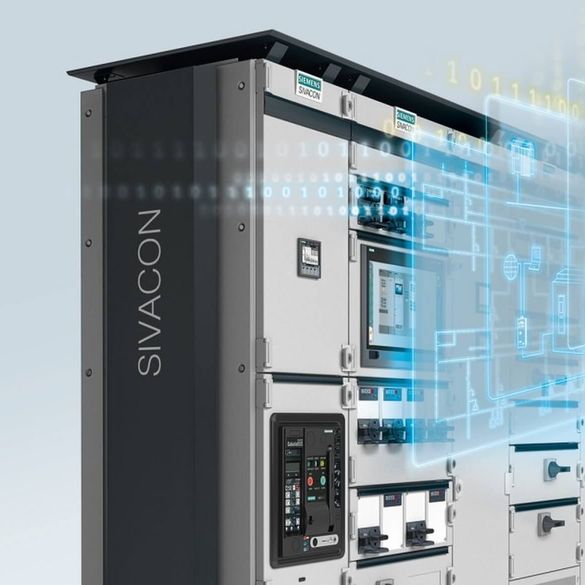
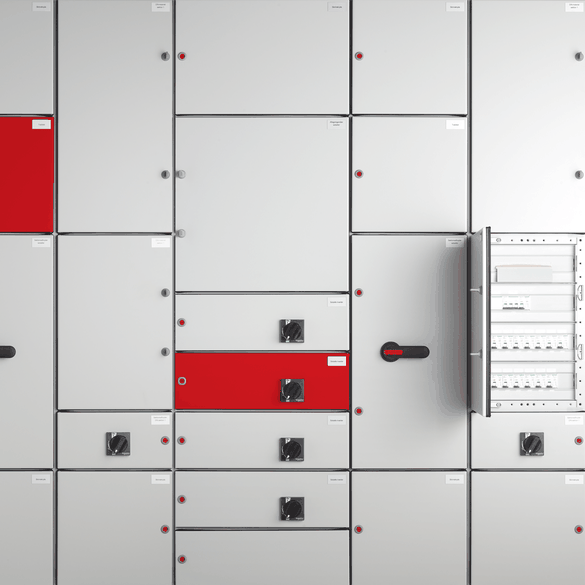
Elektromontage AB has a partnership relation with Cubic. This partnership gives us the ability to offer and deliver very flexible switchgear systems in terms of space and application. The system is designed around modules that easily can be adapted.
Cubic fit well into our product portfolio and can be configured in many ways which gives us advantages compared to more traditional switchgear suppliers.
With over five decades of experience, Elektromontage crafts, manufactures, delivers, and installs comprehensive control panels tailored to industries and machinery applications. Our profound expertise spanning design, project management, production, and installation of MCCs equipped with project-specific requisites instills confidence among our clientele.
We can offer an unique mix of switchgears meeting various specifications both standardized and adapted solutions with our licensed hardware Siemens Sivacon S8 and Cubic.
We focus on switchgear for industrial and machinery applications where the requirements for personal safety, availability, operational reliability, and automation levels are high.
We supply both intelligent and traditional switchgear.
Here you'll find answers to frequently asked questions about switchgear, how it works, and its importance in electrical systems.
Switchgear plays a critical role in the distribution of electricity, acting as a central hub in the power network. These advanced systems distribute electricity from power plants to different parts of the network, adjust the current to specific needs, and ensure uninterrupted access to electricity. In situations that require interruptions or rerouting in the power network, such as for maintenance or in the event of faults, the switchgear is essential for safely and efficiently controlling these processes.
The term "switchgear" derives from its function of "setting" or controlling the flow of electricity through the power grid. This system is equipped with various components, such as circuit breakers, fuses, and switches, which work together to control, protect, and monitor the distribution of electricity. Its ability to effectively manage and isolate electrical equipment makes it indispensable for maintaining the integrity and safety of the power grid. At Elektromontage , we understand the importance of robust switchgear and therefore offer customized solutions that meet the specific requirements of each project, further strengthening our position as a reliable partner in electrical installation and energy management.
A switchgear is a technically complex facility designed to manage and control electrical currents. Visually, it is often a collection of cabinets and panels containing various electrical components such as circuit breakers, relays, transformers, and fuses. Each component plays a vital role in ensuring a reliable power supply and protection against overloads or faults in the power grid. Switchgear can vary in size and configuration depending on its application—from compact units in industrial settings to large outdoor facilities that distribute power to and from power plants. At Elektromontage , we specialize in designing, installing, and maintaining switchgear that not only meets the highest standards for safety and performance but is also tailored to our customers’ unique needs and circumstances. Through meticulous maintenance and expertise, we ensure that every switchgear system we work with maintains its functionality and reliability over time.
A substation is an integral part of the power grid and contains a number of critical components that together ensure the efficient distribution and control of electricity. A substation contains incoming and outgoing cabling that handles electricity at various voltage levels. In addition, switchgear typically includes load break switches, fuses, relay protection, and circuit breakers to effectively protect and control the power grid. Every component in a switchgear plays a vital role in ensuring a stable and safe power supply, and at Elektromontage , we are experts in designing, installing, and maintaining these systems to meet our customers’ unique needs.
The layout of a switchgear is a carefully planned design in which incoming and outgoing electrical cables are connected to one or more central busbars. Each connection point, known as a compartment, represents a section of the switchgear and can be equipped with various devices, such as load break switches with fuses or circuit breakers combined with disconnect switches. These devices allow for the selective switching of specific circuits or components, facilitating flexible control and maintenance of the power grid. By leveraging our expertise in Elektromontage , we design switchgear that not only optimizes power distribution and safety but also maximizes operational reliability and efficiency in our customers’ facilities.
Substations are a critical component of the electrical distribution system, converting high voltage from power plants to lower voltage levels suitable for use in residential, commercial, and industrial facilities. This process enables the efficient and safe transmission of electricity over longer distances, minimizes losses, and provides the voltage level needed by end users. Furthermore, substations are responsible for distributing the electricity further by branching the current into multiple smaller lines, ensuring a stable and reliable power supply to households and businesses. At Elektromontage , we specialize in the design and installation of substations, and our expertise ensures that they meet both the current and future needs of our customers, with the utmost focus on safety, efficiency, and reliability.
A transformer utilizes the principle of electromagnetic induction to convert alternating current to a higher or lower voltage without changing its frequency. This conversion is made possible by two windings: the primary winding, which receives the original current, and the secondary winding, which outputs the converted current. When alternating current flows through the primary winding, a varying magnetic field is created that induces a current in the secondary winding. The voltage difference between the two windings is determined by their turns ratio, which makes it possible to effectively increase or decrease the voltage as needed.
In the field of electricity distribution and control, switchgear is typically classified into three main categories based on voltage level: low voltage (up to 1 kV), medium voltage (1 kV to 75 kV), and high voltage (over 75 kV). Low-voltage substations are used in local distribution networks and for internal networks in buildings or industrial facilities. Medium-voltage switchgear is used to distribute electricity over larger areas, such as cities or industrial zones. High-voltage switchgear is used in national and regional transmission grids to handle very high currents and voltages, and it is equipped with advanced safety features to manage the risks associated with high-voltage operation. Elektromontage has expertise in low-voltage switchgear and offers customized solutions to meet our customers’ needs, regardless of a project’s size or complexity.
The difference between circuit breakers and disconnect switches lies primarily in their design and function. Circuit breakers are designed to handle electrical loads and have built-in protection for their primary contacts against external influences such as weather and wind. Disconnect switches, on the other hand, lack this protection, which has traditionally led to increased maintenance requirements and a higher risk of failure. With the introduction of Combined technology, these two functions have been integrated into a single unit in which the isolating function is protected within the same contact as the circuit breaker. This innovative approach reduces maintenance requirements and increases the reliability and efficiency of power distribution. Elektromontage applies this technology to offer our customers the most reliable and low-maintenance solutions on the market.
A Motor Control Center (MCC) can have a service life of several decades, depending on its design, operating conditions, environment, and maintenance.
Regular maintenance, proper sizing, and good operating conditions help extend its service life. Factors such as high loads, temperature fluctuations, moisture, and inadequate maintenance, on the other hand, can negatively affect the equipment’s durability.
Individual components may need to be replaced or upgraded during the MCC’s service life to ensure continued safe and reliable operation.
A variable frequency drive (VFD) is a device that regulates the speed and torque of an electric motor by adjusting the frequency and voltage supplied to the motor. This enables energy-efficient and demand-driven operation.
A motor control center (MCC), on the other hand, is a centralized solution for power distribution, control, and protection of multiple electric motors in an industrial facility.
A Motor Control Center may contain variable frequency drives, motor starters, circuit breakers, and other control and protection components. The difference, therefore, is that the variable frequency drive regulates the operation of a single motor, while the Motor Control Center houses equipment for controlling and supplying power to multiple motors.
The purpose of a Motor Control Center (MCC) is to consolidate the power distribution, control, monitoring, and protection of multiple electric motors into a single unit.
By integrating components such as motor starters, overload protection, circuit breakers, and variable frequency drives, the Motor Control Center can streamline operations and simplify both monitoring and maintenance.
Motor Control Centers are used in industries such as manufacturing, power generation, maritime, and mining, where safe and reliable control of electric motors is critical to operations.
A motor control center (MCC) and a distribution panel have different primary functions within electrical installations.
Motor control centers are primarily used to supply electric motors with power and to control, monitor, and protect their operation. They typically contain motor starters, overload protection, circuit breakers, and other equipment designed for motor operation.
Distribution panels are primarily designed to distribute electrical power to different parts of a facility. They include, among other things, circuit breakers, isolators, and protective equipment that enable safe power distribution.
Both types of switchgear contribute to a safe and reliable power supply, but motor control panels are specifically designed for motor control, while distribution switchgear focuses on power distribution.
An MCC unit, also known as an MCC bucket, is a module in a motor control center (MCC) that contains equipment for controlling and protecting a single motor or other electrical load.
The unit may contain components such as motor starters, contactors, fuses, circuit breakers, and overload protection. In some configurations, it may also contain a variable frequency drive.
In motor control centers with removable units, the modules can be removed for service or replacement. This simplifies maintenance work and can reduce the need to shut down other parts of the facility. The specific tasks that can be performed during operation depend on the control center’s design and applicable safety procedures.
The modular design allows for flexible adaptation of the motor control center to the facility’s needs.
Email: Phone: 0121-344 00